Formula and assumptions
This is a unit conversion, not a device benchmark:
Capacity in GB ≈ bitrate (Mb/s) × 3,600 × recording hours/day × days × number of streams ÷ 8 ÷ 1,000.
At 1 Mb/s, one stream recorded continuously for 24 hours needs about 10.8 GB/day in decimal units. Assuming a constant bitrate of 4 Mb/s, one stream needs about 43.2 GB/day, before audio, metadata, file system, headroom and RAID requirements. Values shown in GiB on some systems will differ from decimal GB.
Configured bitrate is not actual recorded data
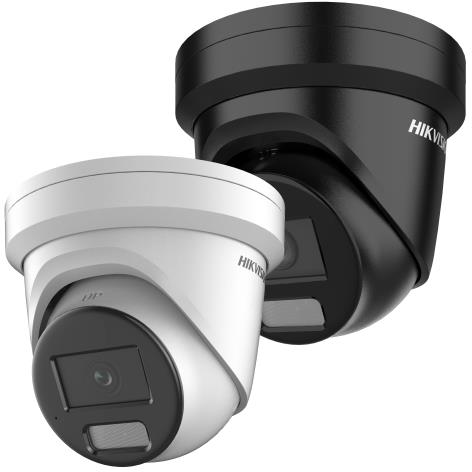
The DS-2CD2346G2H-I(U) datasheet offers CBR/VBR and several codecs. With VBR, the amount of data varies with the scene, lighting/noise and motion. Agree on which stream is recorded, fps, resolution, recording hours and whether recording is continuous or event-based.
Do not assume motion-based recording always captures enough: pre/post-event time, sensitivity and missed-detection scenarios must be tested. The proportion of time with motion used in an estimate is an assumption to be measured on site, not a universal figure for every store.
H.265+ is not a fixed percentage saving
Hikvision describes H.265+ as optimised for surveillance scenes with a stable, rarely changing background and moving objects that appear intermittently across many segments. Do not take marketing ratios as a guarantee for every scene. Check the device, codec, decoding capability and compatible recorder configuration.
Conditions to check during deployment
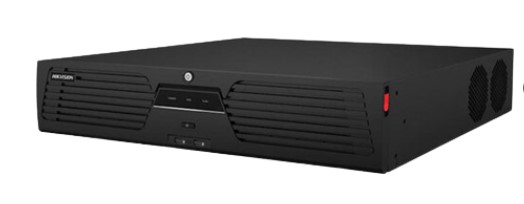
Build a table for each stream: expected bitrate, recording hours, retention days, audio and redundancy requirements. Compare usable capacity after RAID and drive configuration; measure actual recorded data at busy and quiet hours, then update the estimate. This article does not provide hard-drive prices, stock or guaranteed capacity for any specific site.
Sources were cross-checked on 02/10/2026. Specifications must be re-checked against the model/document version and installation environment; this content does not replace a site survey or technical confirmation.